Certificate Course In Clinical Dietetics
Duration: 3 Months | Mode: Online with Clinical Training
The Certificate in Clinical Dietetics is a structured online training program designed to provide in-depth knowledge and practical expertise in the field of clinical nutrition and dietetics. The program equips participants with the ability to assess, plan, and implement effective dietary interventions for the prevention and management of various health conditions.
Delivered through interactive online sessions and supplemented with clinical training components such as case-based discussions, diet chart preparation, and real-world scenarios, the course bridges the gap between theoretical concepts and clinical practice.
Program Highlights:
Comprehensive modules on clinical nutrition and dietetics.
Practical training through case studies and clinical simulations.
Guidance from experienced faculty and practicing dieticians.
Emphasis on therapeutic, preventive, and lifestyle-based nutrition.
Flexible online learning format with structured clinical exposure.
Eligibility:
MBBS, BDS, AYUSH Doctors
Physiotherapists and Nurses
Paramedical Professionals
Graduates in Nutrition & Dietetics
Non-medical graduates with an interest in clinical dietetics and healthcare
Certification & Outcome:
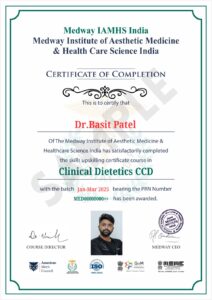
Upon successful completion, participants will be awarded a Certificate in Clinical Dietetics, enhancing their professional skills in dietary counseling, nutrition management, and patient care across clinical and lifestyle healthcare settings.
-
INTRODUCTORY VIDEO MUST WATCH
-
Study Material
-
Module 1-FOUNDATIONS OF NUTRITION AND DIETETICS
-
Module 2-CLINICAL NUTRITION PRINCIPLES
-
Module 3-DIET IN LIFESTYLE AND METABOLIC DISORDERSIntroduction To Exercise and Physical Fitness0sPhysical exercise and physical Fitness0sFull Body Kids Exercise0s]Physical fitness vs exercise0sTHERAPEUTIC DIET PLAN CNDN0sROLE OF NUTRITION IN MANAGING PCOD CNDN0sKETO DIET.INTERMITTENT FASTING AND FAT LOSS DIET PLAN PREP PART 1SDRT0sKETO DIET.INTERMITTENT FASTING AND FAT LOSS DIET PLAN PREP PART 2SDRT0s
-
Module 4-DIET IN GASTROINTESTINAL ,RENAL AND HEPATIC DISORDERS
-
Module 5-DIET IN CRITICAL CARE,SURGERY AND SPECIAL CONDITIONS
-
Module 6-APPLIED CLINICAL DIETETICS AND PRACTICAL TRAINING
-
Module 7- Strategies For Preventing Weight Regain
-
MODULE 8-FOOD SCIENCE
-
QUIZES
-
EXAM LINK
 We are honored to introduce our highly sought-after training course designed to equip you with comprehensive knowledge and skills in weight loss management. The Certified Weight Loss Coach Program offers an in-depth exploration of key areas including:
Obesity: Understand the complexities of obesity, its causes, and effective strategies for prevention and management.
Physiology: Gain insights into the physiological processes that affect weight and metabolism.
Pathology: Learn about the pathological aspects of weight-related health issues.
Anatomy: Study the human anatomy to understand how body structure influences weight management.
Exercise/Yoga: Access exclusive video content demonstrating effective exercise routines and yoga practices tailored for weight loss.
Detox Drinks: Discover recipes and benefits of detox drinks that aid in cleansing and weight management.
Course Materials: Receive comprehensive PDFs and resources with lifelong access to support your continuous learning and application.
Join our Certified Weight Loss Coach Program to become a knowledgeable and effective weight loss coach, equipped with the tools to help others achieve their health and fitness goals.
Weight Loss Management Certificate Course
Course Duration: 4 Weeks
Mode of Delivery: Online
Course Type: Self-paced with live Q&A sessions
Course Level: Beginner to Intermediate
Target Audience: Healthcare professionals, dietitians, fitness trainers, and individuals interested in weight management.
Course Objectives:
Understand the fundamentals of weight management and its importance in overall health.
Explore different dietary strategies and exercise regimes for effective weight loss.
Analyze the role of behavior change, lifestyle modifications, and mindset in weight management.
Learn to design personalized weight loss programs for diverse populations.
Course Modules:
Week 1: Introduction to Weight Management
Overview of Obesity & Overweight:
Global statistics and health implications.
Obesity-related diseases (diabetes, heart disease, etc.).
Body Composition:
BMI, BMR, and fat percentage.
Energy balance: calories in vs. calories out.
Setting Realistic Weight Loss Goals:
SMART goals in weight loss.
Week 2: Nutritional Strategies for Weight Loss
Understanding Macronutrients:
Role of proteins, carbohydrates, and fats in weight loss.
Diet Plans for Weight Management:
Low-carb, ketogenic, and intermittent fasting diets.
Importance of micronutrients and hydration.
Meal Planning & Portion Control:
Designing effective meal plans.
Reading and understanding food labels.
Week 3: Exercise and Physical Activity
Importance of Exercise in Weight Loss:
Types of exercises: aerobic, resistance training, and flexibility.
The role of High-Intensity Interval Training (HIIT).
Creating Exercise Plans for Weight Loss:
Tailoring exercise regimes based on individual fitness levels.
Exercise and Its Effect on Metabolism:
Understanding post-exercise metabolism and fat burn.
Week 4: Psychological Aspects & Long-term Maintenance
Behavior Change and Motivation:
Techniques for sustaining motivation during weight loss.
The role of counseling in weight management.
Mindful Eating:
Stress, emotional eating, and its impact on weight.
Mind-body connection in weight loss.
Maintaining Weight Loss:
Strategies for preventing weight regain.
Lifestyle changes for long-term success.
Assessment & Certification:
Assignments & Case Studies:
Real-life case studies on weight loss management.
Develop a comprehensive weight loss plan for a case client.
Final Quiz:
An online multiple-choice assessment to test knowledge.
Certification:
Participants who complete the course and pass the assessment will receive a “Weight Loss Management Certificate” from Medway Iamhs India.
Additional Resources:
Live Q&A Sessions:
Weekly live discussions with weight loss experts.
Access to Recorded Lectures:
Available throughout the course duration.
Recommended Reading:
Research papers and articles on the latest trends in weight loss and obesity management.

What's included
- Total Fee - Rs.5,000/-
- Duration - 3 Months
- Study Material
- Video Lectures
- Certificate