Certification Course In Rheumatology And Orthopedics
-
INTRODUCTORY VIDEO MUST WATCH
-
Study Material Library
-
Module 1-Introduction To Rheumatology
-
Module 2-Immunology And pathophysiology Of Rheumatic Diseases
-
Module 3-Diagnosis Technique In Rheumatology
-
Module 4-Rheumatoid Arthritis
-
Module 5-Osteoarthritis
-
Module 6-Systemic Lupus Erythematus(SLE)
-
Module 7-Ankylosing Spondylitis And Spondyloarthropathies
-
Module 8-Gout And Crystal Arthropathies
-
Module 9-Psoriatic Arthritis
-
Module 10-Systemic sclerosis (Scleroderma)
-
Module 11-Vasculitis Syndromes
-
Module 12-Sjogren Syndrome
-
Module 13-Pediatric Rheumatology
-
Module 14-Fibromyalgia And Chronic Pain Syndromes
-
Module 15-Treatment Modalities in Rheumatology
-
Module 16-Advanced Imaging And Interventional Procedures
-
Module 17-Case studies And Clinical Practice
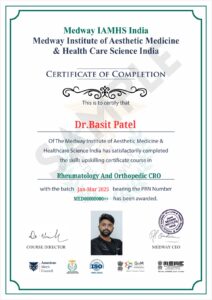 A certification course in rheumatology would focus on the diagnosis and management of rheumatic diseases, covering autoimmune and inflammatory conditions that affect joints, muscles, and bones.
Syllabus for Certification in Rheumatology
Module 1: Introduction to Rheumatology
Overview of the immune system and autoimmunity
Introduction to rheumatic diseases
Basic anatomy of joints, tendons, ligaments, and connective tissues
Epidemiology of rheumatic conditions
Module 2: Immunology and Pathophysiology of Rheumatic Diseases
Autoimmunity and inflammation
Role of cytokines, antibodies, and immune cells in rheumatic diseases
Genetics and environmental triggers
Mechanisms of joint and tissue damage in rheumatic diseases
Module 3: Diagnostic Techniques in Rheumatology
Patient history and physical examination for rheumatic conditions
Laboratory tests: Rheumatoid factor (RF), Anti-CCP, ANA, ESR, CRP, etc.
Imaging techniques: X-rays, MRI, CT scans, and ultrasound in rheumatology
Interpretation of test results and diagnosis
Module 4: Rheumatoid Arthritis (RA)
Pathogenesis and risk factors of RA
Clinical features and diagnostic criteria
Disease activity monitoring and assessment tools
Pharmacological management (DMARDs, biologics, NSAIDs)
Non-pharmacological management (physical therapy, lifestyle modifications)
Complications of RA and long-term management
Module 5: Osteoarthritis (OA)
Pathophysiology and risk factors of OA
Diagnosis and clinical features of OA
Pharmacological treatments (NSAIDs, pain relief, joint injections)
Role of physiotherapy and lifestyle interventions
Surgical interventions for advanced OA (joint replacement)
Module 6: Systemic Lupus Erythematosus (SLE)
Pathophysiology and triggers of lupus
Clinical features and organ involvement in SLE
Diagnostic criteria (ANA, Anti-dsDNA)
Pharmacological treatment (immunosuppressants, corticosteroids)
Monitoring disease activity and managing flares
Complications and long-term care of lupus patients
Module 7: Ankylosing Spondylitis (AS) and Spondyloarthropathies
Overview of seronegative spondyloarthropathies
Pathophysiology and genetics of AS (HLA-B27)
Diagnosis, clinical presentation, and imaging findings
Treatment options (NSAIDs, TNF inhibitors, physiotherapy)
Management of spinal deformities and complications
Module 8: Gout and Crystal Arthropathies
Pathophysiology and causes of gout
Diagnosis (serum uric acid levels, synovial fluid analysis)
Acute and chronic management of gout (uric acid-lowering therapy)
Treatment of crystal-induced arthritis (calcium pyrophosphate deposition disease)
Module 9: Psoriatic Arthritis
Overview and clinical features of psoriatic arthritis
Relationship between psoriasis and joint disease
Diagnostic criteria and imaging in psoriatic arthritis
Management strategies (DMARDs, biologics, lifestyle modifications)
Module 10: Systemic Sclerosis (Scleroderma)
Pathogenesis of systemic sclerosis
Clinical features and diagnosis (limited vs diffuse disease)
Vascular and organ involvement in scleroderma
Treatment approaches (immunosuppressants, symptom management)
Module 11: Vasculitis Syndromes
Overview of different types of vasculitis (Giant cell arteritis, ANCA-associated vasculitis)
Pathogenesis, risk factors, and clinical presentation
Diagnostic tools (biopsy, ANCA testing)
Treatment (corticosteroids, immunosuppressants)
Module 12: Sjögren’s Syndrome
Pathogenesis and risk factors of Sjögren’s syndrome
Clinical features (dry eyes, dry mouth, systemic involvement)
Diagnostic criteria and tests (Schirmer’s test, ANA, Anti-SSA/SSB)
Management strategies (symptomatic relief, immunosuppressants)
Module 13: Pediatric Rheumatology
Juvenile Idiopathic Arthritis (JIA): Types, diagnosis, and treatment
Pediatric lupus and vasculitis syndromes
Growth and development considerations in pediatric rheumatic diseases
Module 14: Fibromyalgia and Chronic Pain Syndromes
Pathophysiology of fibromyalgia
Diagnosis and clinical presentation (tender points, chronic pain)
Pharmacological (antidepressants, anticonvulsants) and non-pharmacological management
Role of cognitive behavioral therapy and lifestyle changes
Module 15: Treatment Modalities in Rheumatology
Disease-modifying antirheumatic drugs (DMARDs) and biologics
Non-steroidal anti-inflammatory drugs (NSAIDs) and corticosteroids
New and emerging therapies (JAK inhibitors, IL-6 inhibitors)
Role of physical therapy, exercise, and rehabilitation
Module 16: Advanced Imaging and Interventional Procedures
Role of musculoskeletal ultrasound in rheumatology
Synovial fluid analysis and joint aspiration
Injection therapies (corticosteroid injections, viscosupplementation)
Imaging techniques for early diagnosis and disease monitoring
Module 17: Case Studies and Clinical Practice
Case discussions on various rheumatic conditions
Problem-solving through real-world scenarios
Management strategies for complex cases

What's included
- Total Fee - Rs.5,000/-
- Duration - 3 Months
- Study Material
- Video Lectures
- Certificate